

14 Aug Direct estimates of crinoid lifespan based on radiocarbon dating of the modern deep-sea stalked rhizocrinid Democrinus
Authors
Przemysław Gorzelak, Michał Kowalewski, Tomasz K Baumiller, Quan Hua, Mariusz A Salamon, Katarzyna Janiszewska
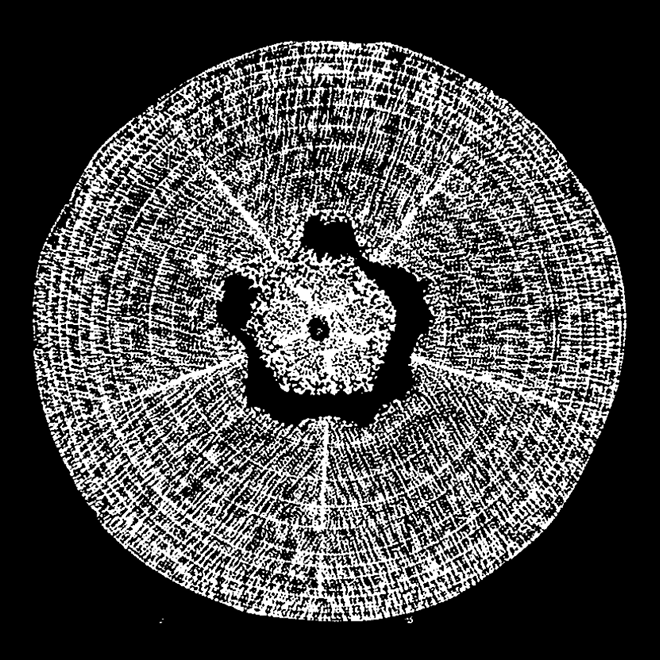
Although lifespan underpins life-history strategies and population dynamics, accurate longevity estimates remain challenging for deep-sea taxa such as stalked crinoids. Here, authors combined Micro-CT tomography with high-precision radiocarbon dating to estimate longevity and growth in Democrinus collected at 260 m depth off Roatán, Caribbean Sea. Tomographic analysis of the calyx identified 10–13 growth rings, depending on the analytical approach. Nine columnals from a single adult with a ~29-cm stalk yielded post-bomb radiocarbon ages, indicating a mean post-larval longevity of 18 ± 2.3 years and a mean stalk growth rate of 1.6 cm yr⁻¹. These findings contrast with suggestions of extreme longevity in deep-sea crinoids and place Democrinus within the broad range of echinoderm lifespans. The discrepancy between radiocarbon ages and ring counts suggests that calyx growth rings are not annual, highlighting the need for caution when using growth banding to estimate echinoderm age.
[Micro-CT slice of a cross-section through the upper portion of the cup in Democrinus sp.]