

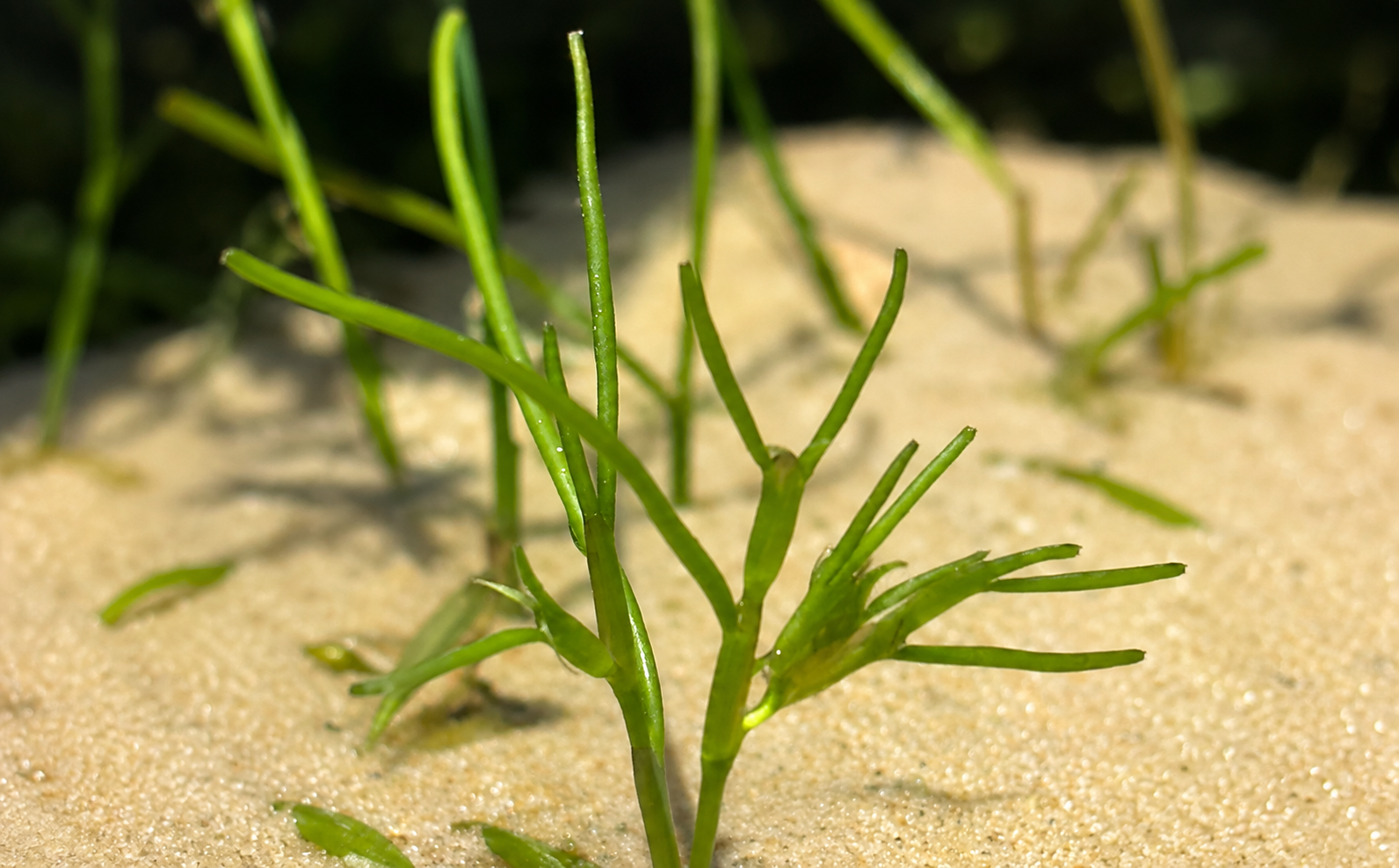
05 Aug Observation of male flowers and induced fruit production of tropical seagrass Syringodium isoetifolium (Alismatales: Cymodoceaceae) in an ex situ aquarium
Authors
May C Goh, HR Samuel Lee, Pei Zhao Liew, Yan Xiang Ow
Sexual reproduction increases the genetic diversity of seagrasses, improving their ability to adapt to environmental change and disturbance. Yet the flowering and fruiting biology of many tropical seagrass species remains poorly understood. In this study, male flowers of Syringodium isoetifolium appeared 26 days after inflorescences were first observed, while female flowers emerged 11 days later. Between April and July 2025, researchers documented 14 male and 6 female flowers from eight flowering shoots. All female flowers were artificially pollinated, resulting in the formation of two fruits within three days. Fruiting plants showed a reduction in belowground biomass after 34 days. These observations provide valuable new insights into the reproductive phenology of tropical seagrasses and suggest that assisted pollination may enhance fruit production. Although the study was conducted under ex situ, semi-controlled conditions, the findings offer important preliminary evidence with implications for understanding the reproductive ecology of S. isoetifolium.
(Cyme inflorescence of female Syringodium isoetifolium observed in an outdoor aquaria, with the female flower structures)