

13 Nov Using light traps to assess larval fish and octopus paralarvae diversity and ontogenetic structure around Santa Catalina Island, California
Authors
Katherine E. Dale, Elena Pilch, Mary E. Gomes, Nora A. Laszlo, Adam W. Mercer, Rita S. Mehta
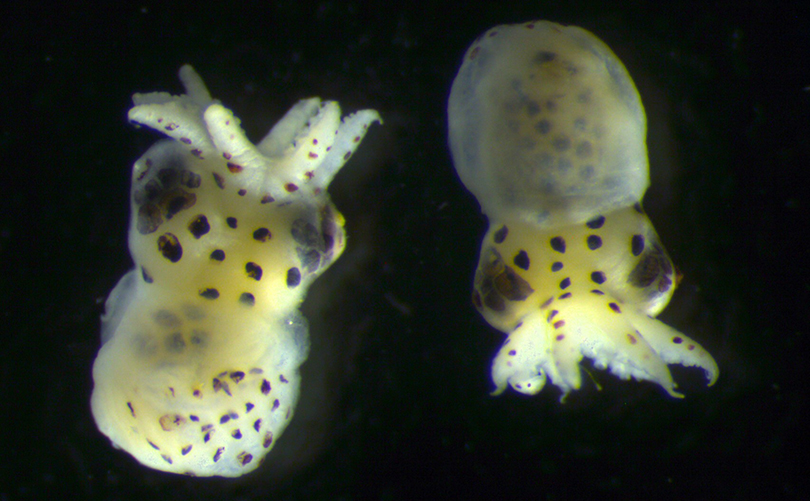
This study evaluates the effectiveness of light traps in sampling larval fishes and octopus paralarvae around Santa Catalina Island, California. Conducted across three sites and two seasons (2018–2019), the research identified nearly 16,000 fish larvae and over 200 octopus paralarvae through morphology and DNA barcoding. Results revealed stable diversity and abundance across years and seasons, with Octopus bimaculatus paralarvae appearing only in summer months. Cryptic, substrate-associated fish species—particularly blennies and gobies—dominated collections, emphasizing the method’s value for detecting taxa often underrepresented in traditional plankton surveys. The authors highlight light traps as a cost-effective complement to offshore sampling, improving biodiversity assessments and understanding of early life stages for species that are poorly described or overlooked in existing monitoring programs. (Photo courtesy of Katherine Dale)